Rhinoplasty
Try a new nose on your own photo, before you decide.
What the operation involves, how recovery goes, what it typically costs, and a simulator to show your surgeon the change you want. Surgeons will find the measurements and controls further down.
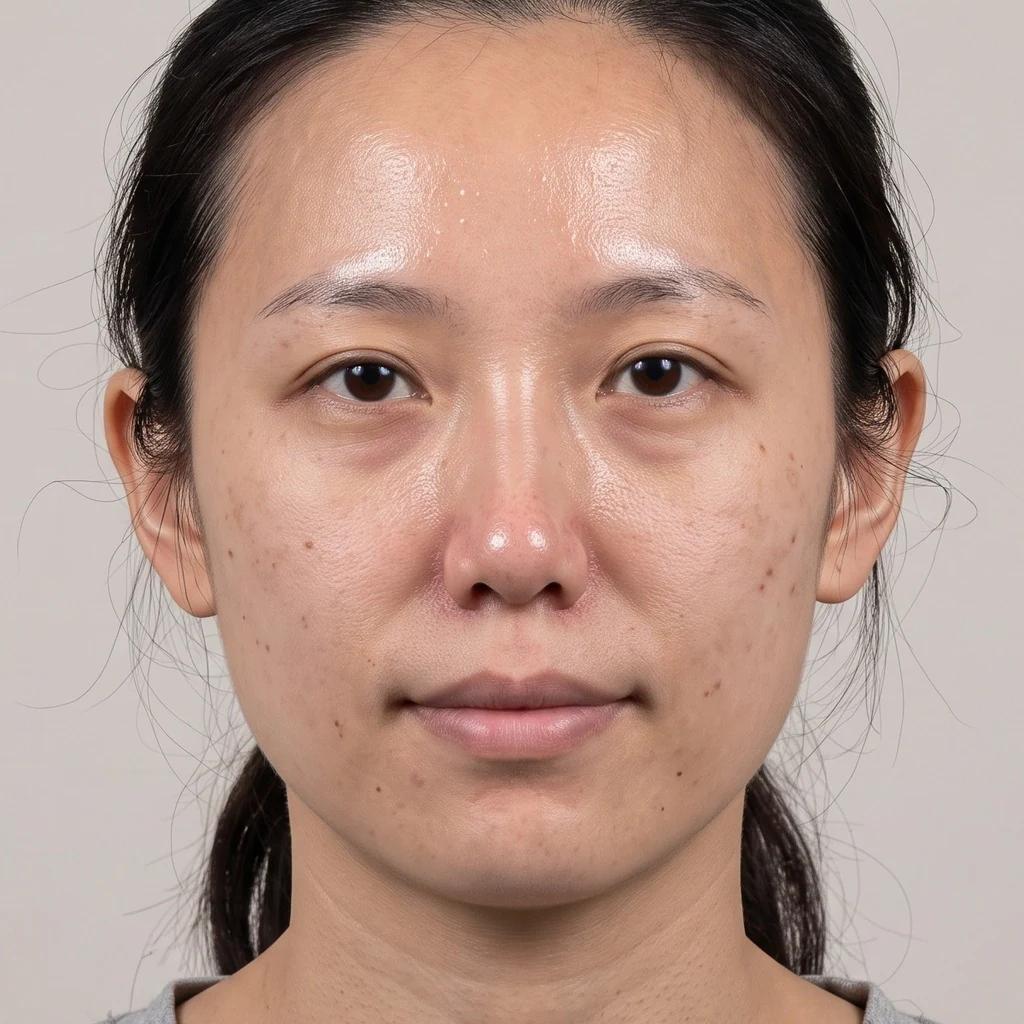
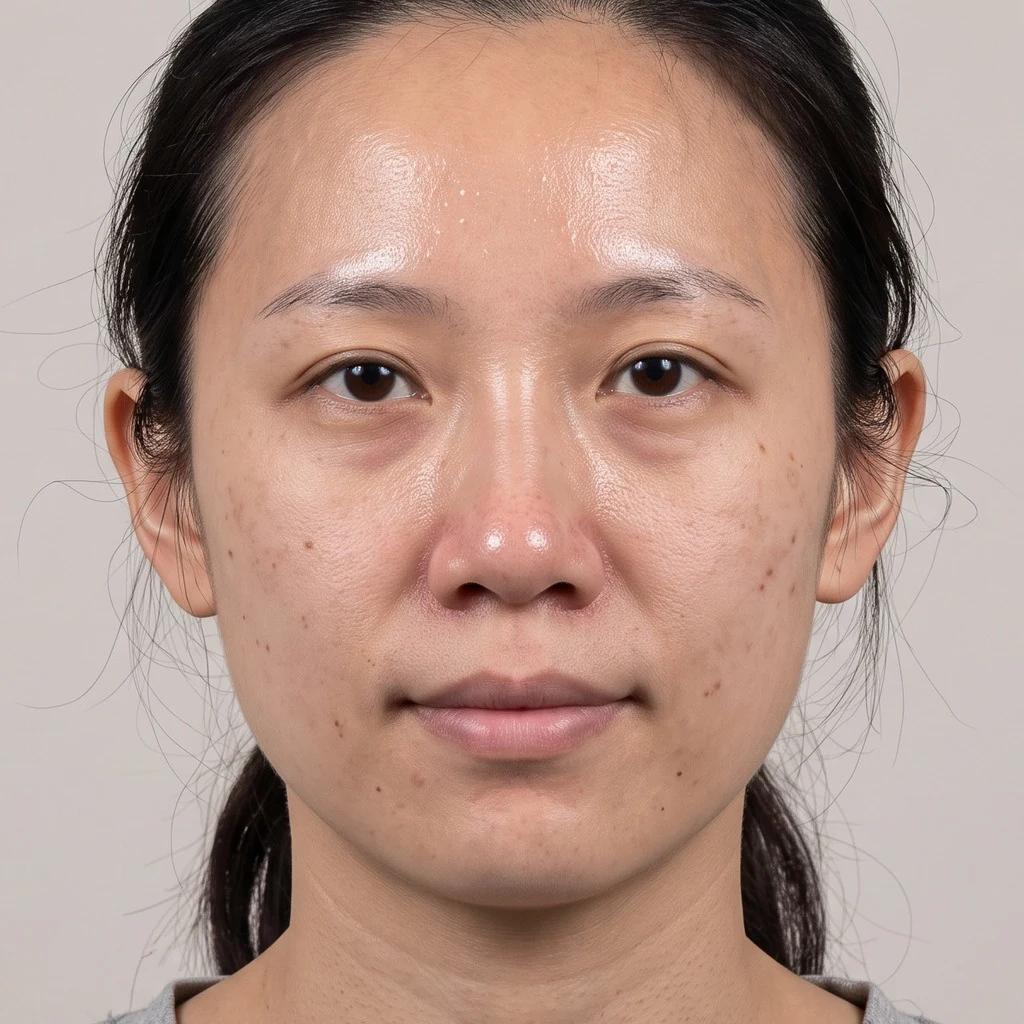
BeforeSimulated
Front view
Tip width refined by 0.9 mm and alar base width narrower by 1.2 mm on an AI-generated face. Simulator output, illustrative only.
At a glance
What rhinoplasty is.
Rhinoplasty reshapes the nose: the bridge, the tip, the nostrils, or all of them. In a closed rhinoplasty the cuts are inside the nostrils. An open rhinoplasty adds a small cut between them, which gives the surgeon a clearer view of the cartilage. If the septum is crooked, it can be straightened in the same operation to help breathing.
- In surgery, asleep or sedated
- 1.5–3 h
- Nights in hospital, often none
- 0–2
- Off work or school
- 1–2 wk
- Until the final shape shows
- 1 yr
Nose types
Common nose shapes, each set in the simulator.
Each case is a different AI-generated face. The after is the simulator's own output, captioned with the controls that made it.
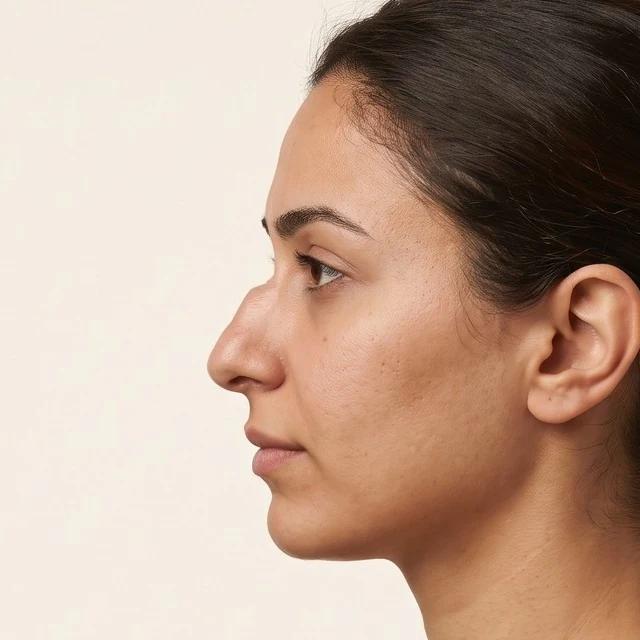
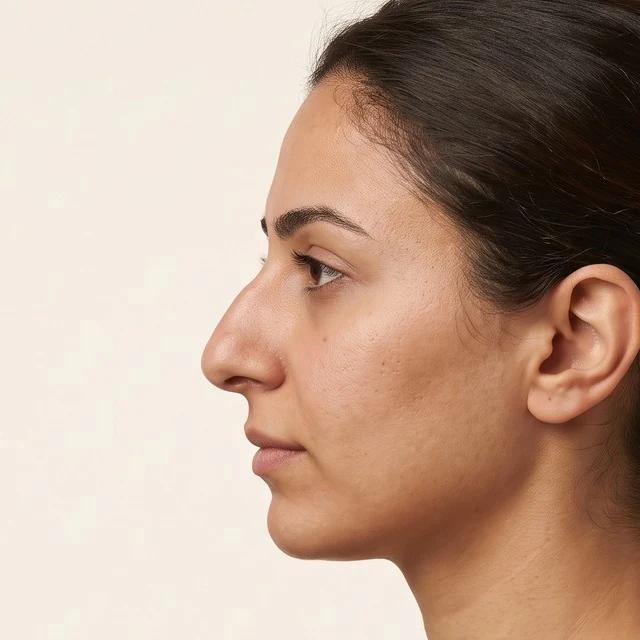
BeforeSimulated
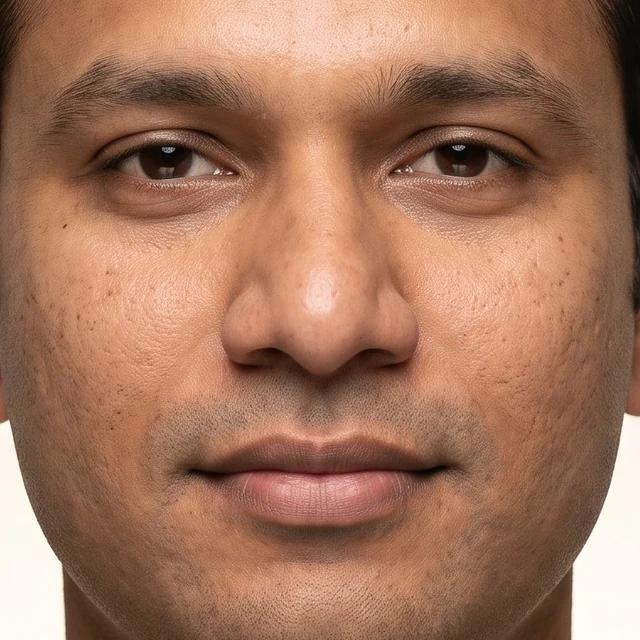
Dorsal hump
A bump on the bridge, plainest in profile. Dorsal height lowers it and leaves the tip as it is.
Dorsal height smaller by 2.2 mm on an AI-generated face. Simulator output, illustrative only.
Try it on your photo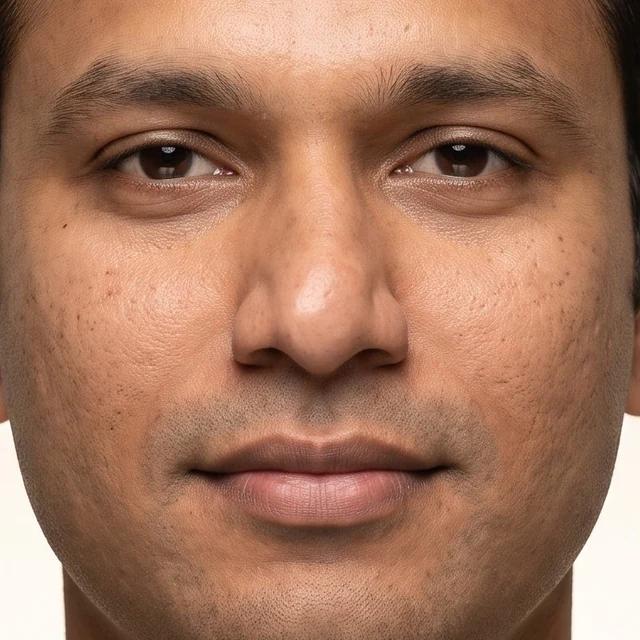
BeforeSimulated
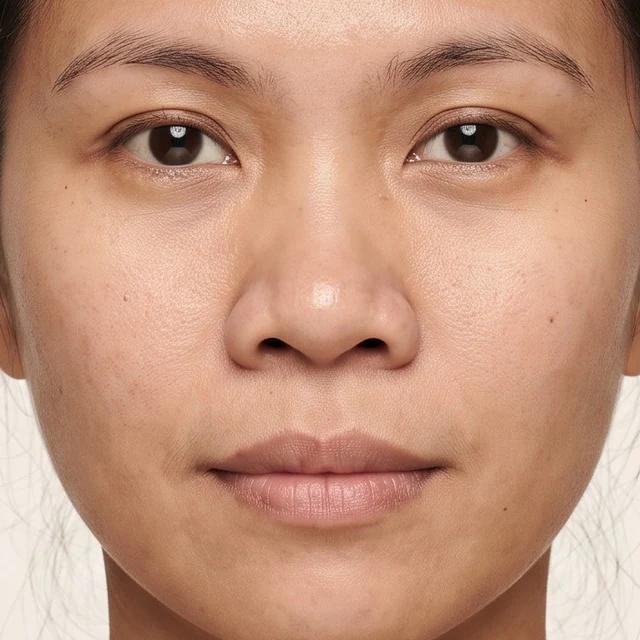
Bulbous tip
A broad, rounded tip with little definition. Tip width narrows the lobule and leaves the bridge as it is.
Tip width refined by 1.8 mm on an AI-generated face. Simulator output, illustrative only.
Try it on your photo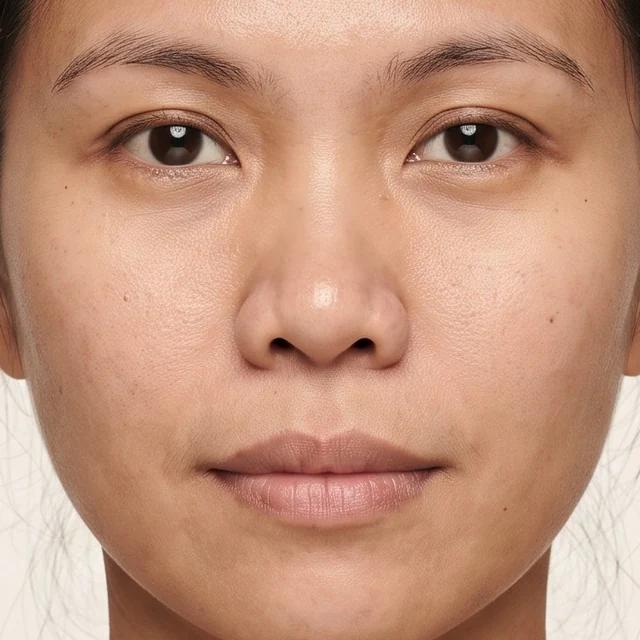
BeforeSimulated
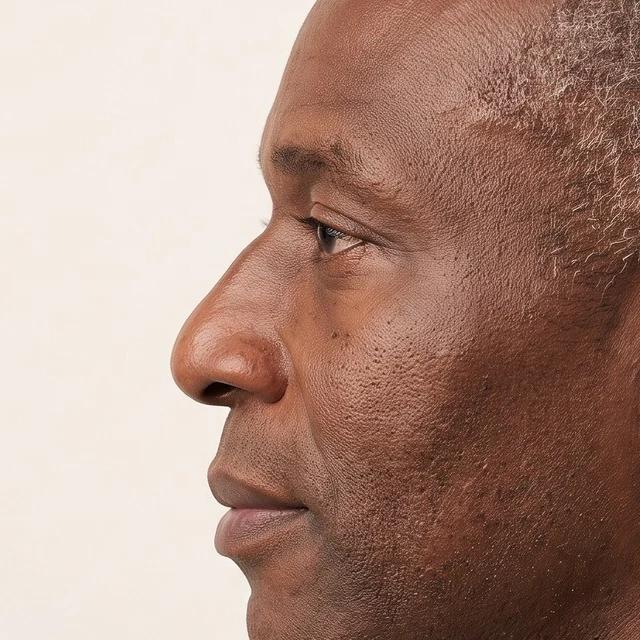
Wide nostrils
Nostrils that flare wide at the base. Alar base width brings the base in and leaves the tip as it is.
Alar base width narrower by 2.2 mm on an AI-generated face. Simulator output, illustrative only.
Try it on your photo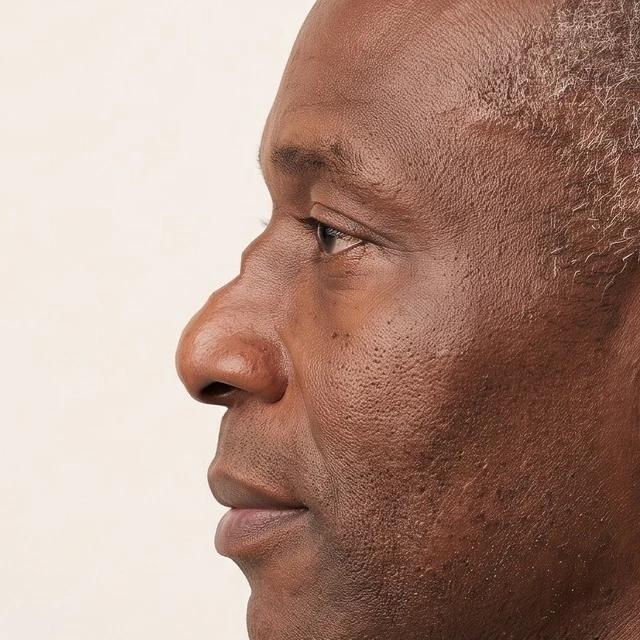
BeforeSimulated
Drooping tip
A tip that hangs below the line of the bridge, often with age. Tip rotation turns it up and shows more of the columella.
Nasolabial angle (rotation) up by 5° on an AI-generated face. Simulator output, illustrative only.
Try it on your photoRecovery
Recovery, week by week.
What most people go through after a first rhinoplasty.
- About 1 week
Splint off
The splint and stitches come off at about a week, sometimes two. Any packing inside the nose is out within a few days.
- 1 to 2 weeks
Back to work or school
Most people are back at a desk or in class within one to two weeks.
- 2 to 3 weeks
Bruising fades
Bruising and redness around the eyes and nose fade over two to three weeks.
- 4 to 6 weeks
Exercise again
Walking is fine within days. Strenuous exercise and contact sports wait four to six weeks. Keep glasses off the bridge until your surgeon says otherwise.
- 2 to 6 months
Swelling settles
Most of the swelling is gone within a few months. The tip is the last part to settle.
- About 1 year
The final shape
The refined result, especially at the tip, is judged at about a year.
Typical timings from the NHS, ASPS, BAPRAS, Cleveland Clinic and MedlinePlus. Your surgeon's plan comes first.
Cost
What a first rhinoplasty typically costs.
Typical ranges for a first rhinoplasty. Revision and rib-cartilage work cost more. Your quote depends on the surgeon, the technique and what the fee includes.
| Where | Typical range |
|---|---|
| Mumbai, インド | ₹1L – ₹2.5L |
| Delhi, インド | ₹90k – ₹2.5L |
| Bengaluru, インド | ₹80k – ₹2L |
| Pune, インド | ₹70k – ₹1.6L |
| Bangkok, タイ | ฿60k – ฿200k |
| London, イギリス | £8,000 – £15,000 |
| アメリカ合衆国 | $8,000 – $20,000 |
Compiled from clinic price lists and medical travel sites published in 2025 and 2026. A guide only, not a quote.
Before your consultation
Bring the picture, and your questions.
Try the change on your photo
Move one part at a time until it looks right to you, then save the before and after to show your surgeon.
Check the surgeon
Ask about their training, how many rhinoplasties they do, and to see their own before and after photos.
Ask what is realistic
Show the picture and ask what your skin, cartilage and breathing allow. The simulation is a starting point, not a promise.
Ask about the plan
Open or closed, what the fee includes, where you recover, and when you come back for checks.
Questions patients ask
No. It shows a proposed change on your photo so you and your surgeon can agree on direction and degree. It does not model healing, skin thickness or cartilage.
Most people describe soreness and a blocked nose rather than severe pain. Ordinary pain relief usually covers it, and it eases within a few days to a week.
Largely, yes. The change is long-lasting, though your nose keeps ageing with the rest of your face.
Often. If the wall between the nostrils, the septum, is crooked, it can be straightened in the same operation. This is called a septorhinoplasty.
Old enough that your nose has finished growing. Many surgeons wait until about 15 to 16 for girls and a little later for boys.
Bleeding, infection, a numb nose, trouble breathing, a changed sense of smell, and a result you are not happy with, which sometimes means a second operation. A hole in the septum is a rare risk.
For surgeons
What the simulator gives you in the consultation.
The nasal analysis with its published references, every control with its range, and how to run it with the patient in the chair.
Apply for Founding PartnerWhat it measures
The nasal analysis and its published references.
The simulator measures these on the patient's photo. Each table gives the published reference, the group it was published for, and its source.
Front view
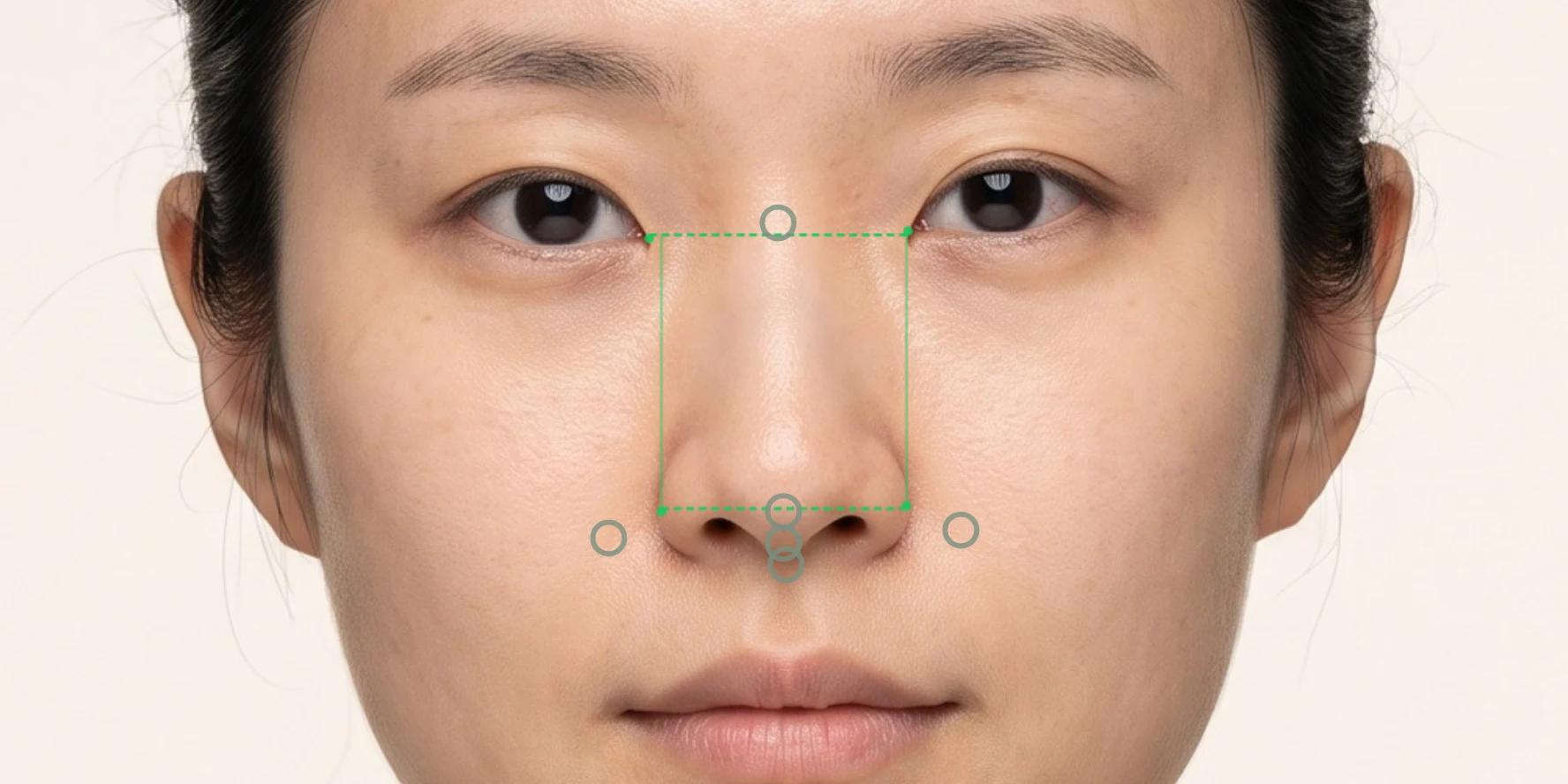
Alar to intercanthal ratio
The simulator marks the nostril base and the inner eye corners on the front photo of an AI-generated model face, then prints their ratio: 0.95, against a reference of 0.85–1.15 (Farkas, 1994). Simulator output, illustrative only.
| Measurement | What it is | Reference | Applies to | Source |
|---|---|---|---|---|
| Alar to intercanthal ratio | Nostril base width against the distance between the inner eye corners. | 0.85–1.15 | Either sex, population not stated, observed | Farkas, 1994 |
| 1.00 | Either sex, Caucasian, point ideal | Brito et al., 2020 |
Side view
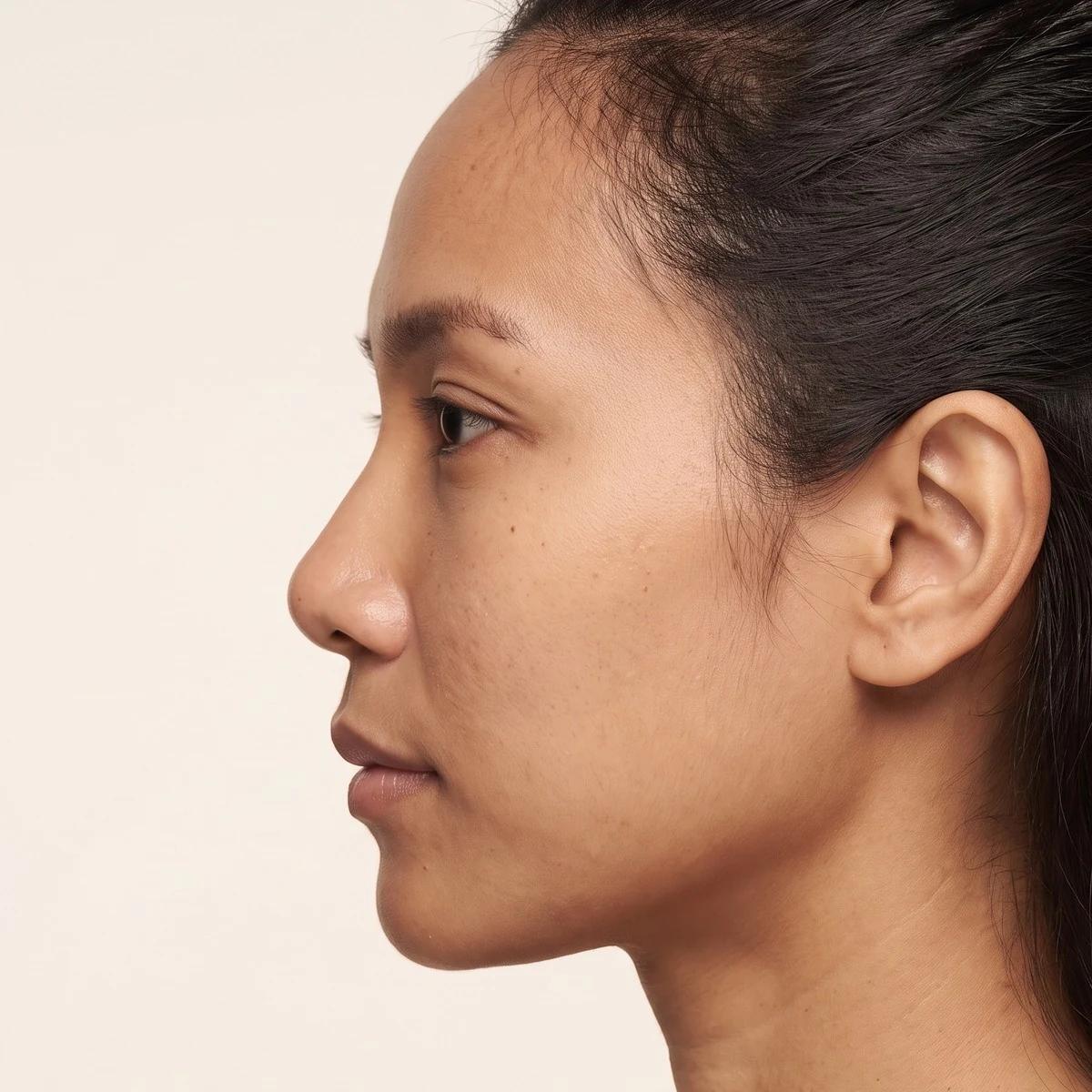
BeforeSimulated
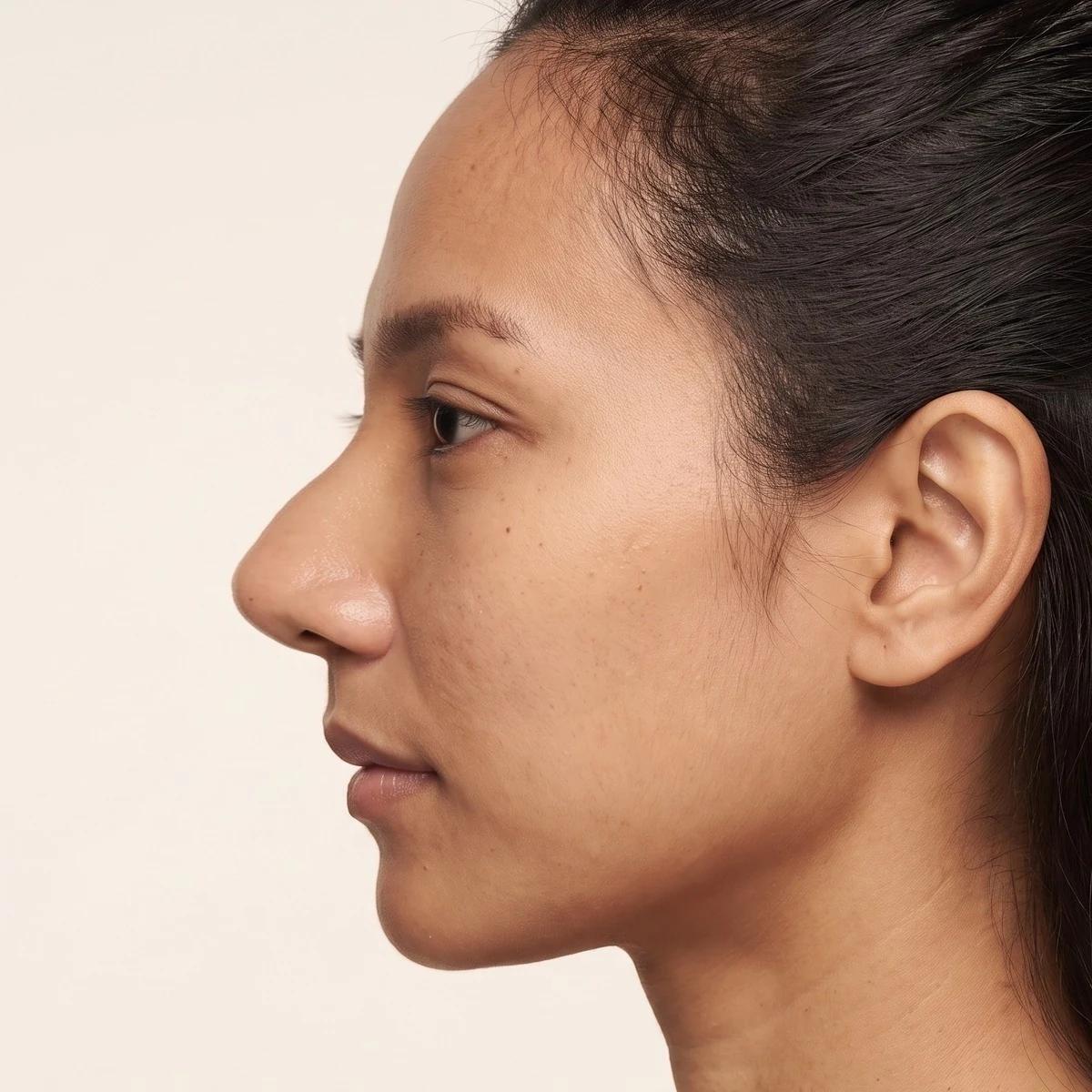
Profile
Dorsal height larger by 2.8 mm and tip projection projected by 2.3 mm on the profile of an AI-generated model face. Simulator output, illustrative only.
In the simulator, side-view angles are measured on a profile photo like this one. The table below gives their published references.
| Measurement | What it is | Reference | Applies to | Source |
|---|---|---|---|---|
| Nasofrontal angle | The angle at the nasion between the forehead and the bridge. | 115–135° | Either sex, Caucasian, ideal | Powell and Humphreys, 1984 |
| 130° | Male, Caucasian, point ideal | Brito et al., 2020 | ||
| 134° | Female, Caucasian, point ideal | Brito et al., 2020 | ||
| 129.2–147.8° | Male, Turkish, observed | Yılmaz et al., 2023 | ||
| 133.5–149.7° | Female, Turkish, observed | Yılmaz et al., 2023 | ||
| 139°† | Either sex, East Asian, point ideal | Liang et al., 2022 | ||
| Nasolabial angle | The angle between the columella and the upper lip. | 90–95° | Male, Caucasian, ideal | Brito et al., 2020 |
| 95–110° | Female, Caucasian, ideal | Brito et al., 2020 | ||
| 90–109° | Male, Turkish, observed | Yılmaz et al., 2023 | ||
| 91.1–109.9° | Female, Turkish, observed | Yılmaz et al., 2023 | ||
| 106° | Either sex, East Asian, point ideal | Sun et al., 2022 | ||
| Nasomental angle | The angle at the tip between the nasion and the chin. | 120–132° | Either sex, Caucasian, ideal | Powell and Humphreys, 1984 |
| Goode ratio | Tip projection divided by nasal length. | 0.55–0.60 | Either sex, Caucasian, ideal | Brito et al., 2020 |
| 0.63† | Either sex, East Asian, point ideal | Sun et al., 2022 | ||
| Total projection* | Alar crease to tip, against nasion to tip. | 0.67 | Either sex, population not stated, point ideal | Mastering Rhinoplasty |
| Tip rotation* | The angle of the tip, measured at the alar crease from the vertical. | 100° | Male, population not stated, point ideal | Mastering Rhinoplasty |
| 105° | Female, population not stated, point ideal | Mastering Rhinoplasty | ||
| Columellar parallelism* | Whether the tip axis runs parallel to the columella. | 0° | Either sex, population not stated, point ideal | Mastering Rhinoplasty |
| Nasal length | Nasion to tip, against midface height. | 0.67 | Either sex, population not stated, point ideal | Mastering Rhinoplasty |
Ideal: an author's target range. Point ideal: one published value with no range. Observed: the spread measured in that group, not a target. * The simulator estimates one landmark of this reading. † From a secondary source; check the original.
References are textbook norms, drawn mostly from Caucasian populations. Use them as reference points for discussion, not as targets for every patient.
Also drawn in the simulator as guides, with no reference listed: Intrinsic projection, Dorsal line, Tip-defining point, Nose symmetry, Nasal thirds, Dorsal aesthetic lines, Facial thirds and fifths, Frankfort horizontal.
References
- Brito, Avashia, Rohrich. Evidence-based nasal analysis for rhinoplasty: the 10-7-5 method. Plast Reconstr Surg Glob Open 2020;8(2):e2632.
- Farkas LG. Anthropometry of the Head and Face. 2nd ed. 1994.
- Liang et al. J Craniofac Surg 2022;33(8):2486–2492.
- Mastering Rhinoplasty, p.111, Fig. 4.7 (a–c), "Aesthetics: extrinsic factors".
- Powell, Humphreys. Proportions of the Aesthetic Face. 1984.
- Sun, Liang et al. J Craniofac Surg 2022;33(1):7–10. Preference survey of 703 raters, including 50 surgeons.
- Yılmaz et al. Anatomy 2023;17(2). Measured in 142 Turkish adults; ranges are mean ± 1 SD.
What you can adjust
Each control moves one part of the nose.
The slider shows its value in millimetres or degrees, inside a fixed range.
| Control | What it changes | Range | View |
|---|---|---|---|
| Dorsal height | Reduces a hump or builds up a low bridge. | −4 to +4 mm | Front and side |
| Dorsal width | Narrows or widens the middle of the bridge. | −4 to +4 mm | Front |
| Tip width | Refines or widens the tip. | −3 to +3 mm | Front |
| Tip rotation | Turns the tip up or down. | −15 to +15° | Front and side |
| Tip projection | Brings the tip forward or back. | −5 to +5 mm | Front and side |
| Nasal length | Shortens or lengthens the nose. | −5 to +5 mm | Front and side |
| Alar base width | Narrows or widens the nostril base. | −4 to +4 mm | Front |
| Deviation correction | Moves a crooked nose toward the midline. | −3 to +3 mm | Front |
Also: each side adjusted on its own, bony base width for surgeons, four one-tap presets, and a brush for fine edits.
In the consult
With the patient in the chair.
Photograph front and side
In published studies, side views matched results more often than front views. Take both.
Turn on the overlays
Show the patient where their angles and ratios sit against the textbook references.
Adjust together
Move one control at a time so the patient sees each change.
Keep the picture
Download the before and after image for the record.
The research
What rhinoplasty imaging studies found.
These studies used other imaging tools, not Faceify.
- 79.5%
of 112 rhinoplasty patients rated the side-view simulation very close to or identical with their result. For the front view, 41.1%. (Punthakee et al., 2009)
- 68%
of 300 ratings by 12 blinded surgeons judged the simulation a realistic picture of the result, fully or with room to be closer. In 32% it was not. (Agarwal et al., 2007)
- 57%
of patients who were not offered surgery were unsatisfied with the proposed simulation, against 16% of those who went ahead. (Lekakis et al., 2020)
- 0.66
correlation between how closely the simulation matched the result and patient satisfaction, across 38 rhinoplasties. (Yamamichi et al., 2025)
Sources
- Agarwal A, Gracely E, Silver WE. Realistic Expectations: To Morph or Not to Morph? Plastic and Reconstructive Surgery. 2007;119:1343–1351.
- Lekakis G, Sykes J, Hens G, Hellings PW. Morphing as a Selection Tool in the Rhinoplasty Consult: A Cross-Sectional Study. Facial Plastic Surgery. 2020;36:112–119.
- Punthakee X, Rival R, Solomon P. Digital Imaging in Rhinoplasty. Aesthetic Plastic Surgery. 2009;33:635–638.
- Yamamichi K, Nakanishi Y, Chen CY. Three-Dimensional Simulation Accuracy and Patient Satisfaction With Rhinoplasty. Aesthetic Surgery Journal Open Forum. 2025;ojaf110.
Questions surgeons ask
No. It shows a proposed change on the patient's photo so you can agree on direction and degree. It does not model healing, skin thickness or cartilage.
A well-lit front photo and a true side profile. Side-view measurements such as the nasolabial and nasofrontal angles need the profile.
No. They are textbook norms, drawn mostly from Caucasian populations. Use them as reference points for discussion, not as targets.
Yes, for rhinoplasty. Live camera mode shows the change on the patient's face in real time, and the camera frame is processed on the device.
関連する外科的の施術
- Chin AugmentationChin projection, height, and width adjustment using Goode's ratio constraints and Ricketts E-line profile balancing.
- V-Line ContouringJaw narrowing, chin reshaping, cheekbone and masseter reduction for refined V-line facial profile with safety-rule engine.
- Buccal Fat RemovalCheek slimming with buccal fat pad reduction, hollowing depth control, and identity-preserving symmetry correction.
Bring it into your consulting room.
Disclaimer: Faceify Labs is a visualisation aid for patient consultation and shared decision-making. It does not diagnose, treat, or recommend any procedure; all clinical decisions are made by the treating surgeon. It is not regulated as a medical device under the PMDA (Japan). All previews are illustrative visualisations of the requested change, not predictions of surgical outcome. Actual results depend on individual anatomy, surgical technique, and healing response.
Real-time simulations run in your browser. Your photo leaves your device only when you save a simulation to your account, and we do not use it to train AI models.